The industry is right: context is the unlock.

Everyone's racing toward it. Context graphs. Personal intelligence. Enterprise efficiency. These are real advances—the data layer is finally being built.

But the industry draws a hard line between "Personal AI" and "Enterprise AI," and we believe this is a category error. Whether you are navigating a marriage or a merger, the variable is the same: Human Complexity.

Current tools can aggregate data—calendars, KPIs, medical records—but they can't see the invisible 90%: the tensions, relationships, and perceptions that actually drive decisions.

Enterprises are Complex Adaptive Systems run by humans. You cannot solve for the system if you are blind to the person.
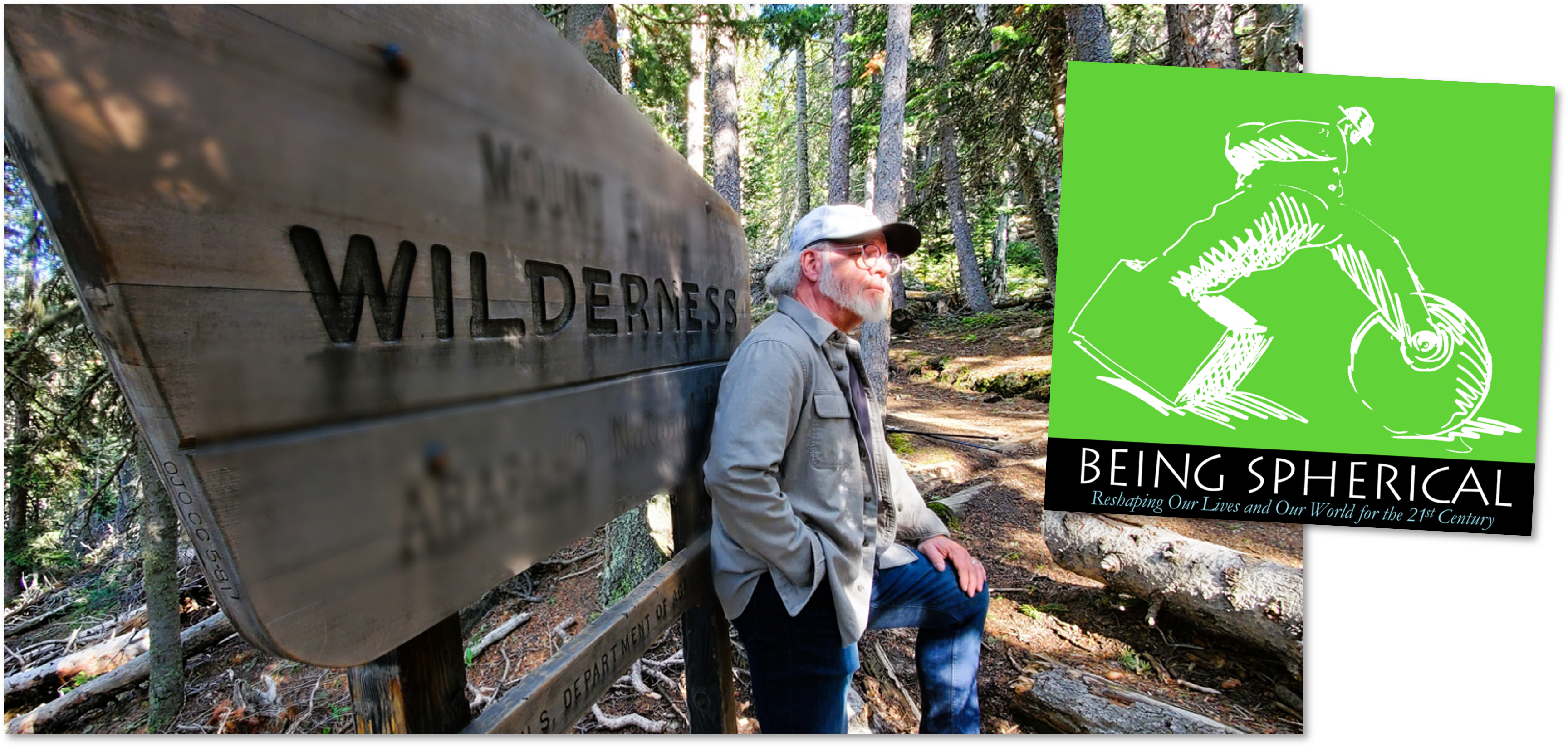
Phil exploring the human terrain

We've spent 25 years learning how to navigate it.

We've mapped the human terrain that code hasn't touched yet. We're not engineers, but we know how to translate it for the machine.

We provide the Ontological Grammar. Just as the rules of English allow for infinite unique sentences, the Sphere's "physics of context" allows for the infinite unique expressions of human reality.

The Data Layer Is Necessary. It's Not Sufficient.

Tech giants are building powerful engines for aggregating personal context. But research points to the same problem:

80% to 90% of the factors that determine health outcomes—the Social Determinants of Health—don't exist in medical records, EHRs, or any system you can query.

You can't find a person's perception of wellbeing in a lab result.

You can't find their hopes and fears in a fitness tracker.

You can't find the shape of their situation in a calendar.

This "human context" is internal and dynamic. It's the invisible architecture that shapes reality—and it's the hardest data to capture.

We Focused on Meaning, Not Aggregation

Most tools specialize in one vertical. We mapped the whole human terrain.

We engineered a spatial system experienced by 1,000 experts across 50 distinct fields—from military resilience to marriage counseling. Across 45,000 engagements, we proved that the same "contextual grammar" creates coherence everywhere—whether condensing 23-page clinical intakes into 15-minute reviews, reducing therapy timelines from 22 sessions to 8, or saving 600 hours of corporate recruiting time.

This is critical because the decision density facing leaders today is exponentially higher than a decade ago.

We focused on mapping the Human Topology—not just for health or strategy, but for coherence. We believe that teaching AI to recognize the person behind the role will enable it to support the actual navigational challenges of modern work and life—transforming the user from a fragmented processor of tasks into a coherent architect of decisions.

The tech giants are building the engine. We built the compass. Together, they create a true Wingman.

Pam Golden

We've been doing this work since before AI knew it needed us.

What the Work Revealed


People live in relationships, not data points.

Every person is embedded in a web of tensions, loyalties, and connections they often can't see until we help them externalize it.

Context isn't content. It's geometry.

Stress has a shape—proximity, distance, pressure. We learned to map that shape.

The whole system changes the meaning of every part.

A symptom means something different when you see the life around it. A decision means something different when you see what it's holding in place.

This is what we're calling Wholistic Systemic Interpretability. Not because we love jargon—but because AI needs a name for the thing it's missing.

Where This Lands


We've seen this failure mode everywhere: Students who couldn't name why they were stuck. Executives with all the data and none of the clarity. Patients whose symptoms only made sense when you saw the life around them.

Enterprise Intelligence — seeing the patterns dashboards miss.
Health and Wellbeing — connecting symptoms to life context.
Communication Intelligence — revealing what's beneath the words.

The Goal Isn't Smarter AI. It's Wiser AI.

Smarter AI optimizes. Wiser AI pauses. It asks if you're asking the right question. It holds the whole situation, not just the prompt.

It creates a safety layer that data alone can't provide. It enables the AI to support daily life with nuance—with the informed capacity to spot when to direct a person to human help.

We're not here to make AI faster. We're here to empower humans to navigate complexity better.

We're Looking for the Team That Suspects They're Missing Something


If you think "we've got context handled," this isn't for you. But if you've watched your model give a technically correct answer that completely missed the point—then you know what we're talking about.

Partner with the Center.

Join us in establishing the Center for Spherical Thinking: a dedicated R&D hub for complexity science in human activity. We continue the deep research; you deploy the reasoning at scale.

Acquire the Asset.

The patent validated the geometry. But the real IP lies beyond the patent—in 25 years of trade secrets. You're acquiring the proprietary and unwritten heuristics and field-tested protocols that no competitor can replicate from a public filing. We'll stay on to help you implement it.

When you combine your massive context graphs with our Wholistic Systemic Interpretability layer, the system graduates from processing files to contextualizing lives. It is finally ready to serve the Whole Person.

The knowledge lives in us. That's the point.

Validating the Architecture

Field Notes from the R&D Phase

Before applying this logic to AI, we stress-tested the framework in the field for 20+ years. The following results are from that foundational pilot phase—proving that the "contextual geometry" holds up under the pressure of real human complexity.

"I love your work to integrate our essential humanity into the evolution of our digital worlds. It is desperately needed in all of healthcare."

— Dr. Rick Barnett, Psy.D.

"I suspect this is the 'next big thing.' It presents an opportunity for a quantitative and qualitative leap... The potential ROI and cost avoidance is very high."

— Dean Brassington, Financial Educator, U.S. Navy

"A tool like this could assist tens of thousands of disaster volunteers... and enhance the nation’s response to disasters."

— Medical Reserve Corps Committee Member, Washington D.C.

"It's a wonderful way to start the engagement... Took 5 to 10 minutes to review. We can have difficult conversations without pulling teeth."

— Celiwe Jones, MA, Employment Specialist

"When we get 65 applications it helps us narrow it down to five. It has helped our interviewers ask deeper questions. Invaluable."

— Yvonne Meyers, Health Systems Director

"You have gone further than I have in mapping... It might be possible to make an experiment structured around the world model."

— Anthony Hodgson, Imperial College, London

"I greatly enjoyed the aggregate data... it truly showed me focus points. It connected all the participants."

— Michael Bielefeld, Battalion Army Chaplain

"Revolutionary in its design... it gives us the capacity to see in an instant information that can be quickly interpreted and acted upon by both the average person and the well-trained professional."

— William C. Bailey, PhD

Where is our focus now? We are dedicated entirely to finding the right steward for this IP. We are in the grind of the evangelist, and Guy Kawasaki captured the intensity of this phase perfectly:

"... imagine being tasked with selling an entire vision, both to developers and to consumers, for a product with capabilities never before seen, working more than 60 hours a week to do so."

— Guy Kawasaki

Phil & Pam Lawson

Co-Founders, Spherit

Let's start a conversation.

hello@sphericalthinking.ai

Copyright 2026 - Spherit LLC